Pages

Showing posts with label novela. Show all posts

Tuesday, October 12, 2010

India: A Novela Where Cultural Differences Become Salient

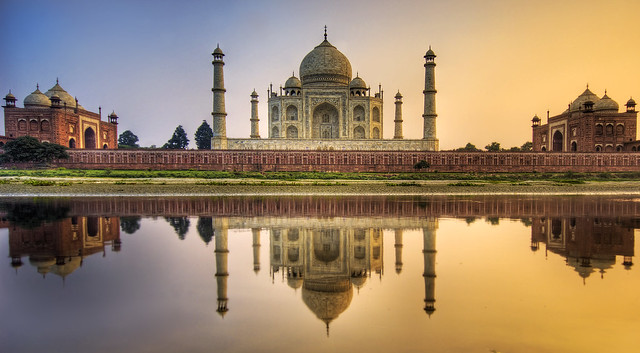
Photo Credit: Trey Ratcliff, Stuck in Customs (Flickr)

It’s almost been a week since India’s premiere on TeleFutura and I must admit that I've been glued to the television screen every single episode. Although last night’s episode focused primarily on developing secondary characters, a lot of interesting things happened:

Raj & Duda

Last night we saw cultural differences between Raj and Duda become more salient. If you haven’t been following, Raj recently broke up with Duda because his family is against him marrying a non-Indian girl (a “firangi”). Upset that Raj ended the relationship so abruptly, the only explanation Duda can come up with is that Raj is in love with another woman. As they converse about their break-up, she insists on finding out who this imaginary woman is and refuses to understand that he left her because he doesn’t want to be ex-communicated from his family, community and caste.

As I watched this scene, I couldn’t help but to think about the cultural differences driving this break-up. Raj, coming from a collectivist society where relationships—to one’s family, to one’s neighbors, to one’s caste—seems to be at the center of everything can’t get Duda to understand that it’s not a lack of love that’s standing between them but an entire community. Duda on the other hand, living in a western society, sees things from a more individualistic perspective. To her, the problem is all about them two and the choices that each of them makes. Although Brazilian society is not as individualistic as those of the United States or Western Europe, her cultural background doesn’t allow her to understand what it means to be excluded from his social circle and caste.

Bahuan & Shankar

We also saw Shankar (Bahuan’s adoptive father) become upset over Bahuan’s plans to leave India for the United States. In the past two episodes, Shankar has been acting a little bit more conservative than we might have expected. While in the first episode he talked about castes being man-made and not necessarily indicative of what a person should do, last night we found out that the reason he didn’t marry the love of his life is because of the restrictions imposed upon his (Brahman) caste. He also has refused to lie for Bahuan because, as a member of the priestly caste, he could never live with lying—no matter how benevolent the lie might be. While I don’t expect him to lie, I do hope we can get a little more clarity as to whether he’s for or against castes. If he doesn’t believe that castes should determine what a man can do, why does he follow the rules of conduct for his caste so strictly?

I guess we’ll have to keep on watching to see where the story takes us next. As we wait for tonight’s episode, let me just say that Duda is not going to stand idly by as Raj leaves for India...

Wednesday, October 6, 2010

India: A Novela About Tradition, Modernity and Cultural Differences


Photo Credit: Trey Ratcliff, Stuck in Customs (Flickr)

If you didn’t watch India on TeleFutura last night, rest assured that it completely surpassed any of my expectations. It was only the first episode, but a lot of ground was covered. Here’s a quick recap of what happened:

Bahuan, who belongs to the dalit or “untouchable” caste, was humiliated by a prejudiced father for having approached his children who belong to the merchant caste (higher caste). Shankar, approaches the scene, defends Bahuan and decides to adopt him to give him a chance at a different life. The next time we see Bahuan, he is a young professional who just came back from a PhD program in the United States. On his first day back in Rajastan, he goes to a Hindu shrine where he meets Maya. Here the unthinkable happened. As they throw flower petals on the statue of the god/goddess to pay their respects, their hands touched and they were instantly attracted to each other.

Maya apparently comes from a relatively modern family who allows her to work the evening shift at a telemarketing company. After meeting with Bahuan for a second time, her excitement can’t be contained and she breaks into dance similar to those in Bollywood movies.  However, we soon find out that her father has been approached by a suitor who wants to marry her.

In the plot line set in Brazil, we also learn about Cadore—a pharmaceutical company that just revealed their plans to merge with an Indian company. Cadore is owned and controlled by Raul and Ramiro Cadore. Raul is clearly unhappy with this life and is on the verge of a mid-life crisis.  On the other hand, Ramiro is a man who seems to be a bit of a workaholic and very ambitious. To his dismay, his son Tarso, is not at all interested in following in his father’s steps.

Lastly, another important character we were introduced to was Raj. Rash is an Indian businessman whose family has always made a living as manufacturers of Indian textiles. While visiting Brazil, however, he fell in love with Duda--a problem for his very traditional Hindu family. When he travels back to India he encounters pressure from his family to get married to an Indian girl who can pass on their tradition to his future children.

The first episode was truly captivating! Not only were we introduced to the underlying tensions between different social classes within Indian society, but we are also subtly introduced to the tension between tradition and modernity. In this episode, real topics are not avoided but rather discussed in a realistic way. The perfect example of this is Bahuan’s surprise to see all the changes India has been through--in particular the new (outsourced) industry of telemarketing. Similarly, through Raj’s storyline we also see how Indians attempt to maintain their identity as they encounter the West.

Tuesday, October 5, 2010

"India" Airs on TeleFutura


Photo Credit: Trey Ratcliff, Stuck in Customs (Flickr)

For novela lovers, tonight is very important as TeleFutura will begin its broadcast of India (2009) at 10 PM.

If you didn’t already know, India is a Brazilian novela created by Gloria Pérez (Caminho das Índias) for Rede Globo. Set in exotic locations—India and Brazil—India tells the story of two people that fall in love with each other but come from different backgrounds. The main premise of the novela is that the protagonists, Maya and Bahuan, will have to struggle to be together as their difference in castes (social classes in Hinduism) keeps them apart. This is because Maya is prohibited from having a romantic relationship with Bahuan, a man who comes from the “untouchable” cast in Indian society.

I am looking forward to watching this novela as it promises to not only take us to a foreign land but also teach us about a foreign culture. As we watch the protagonists fight for their love, we will inevitably be exposed to India’s caste system. This is particularly exciting since broadcasting India in Spanish has the potential of raising awareness about Indian culture amongst Hispanic viewers. Considering that many Hispanic viewers might have never met someone from India before, this is truly promising. Similarly, India is also promising in that it can increase our understanding of Indian society while opening the doors to future interactions between members of both cultures.

Nonetheless, it is also important to recognize that India may bring about the unfavorable effect of stereotyping. As is common in television production everywhere, India will surely rely on some basic stereotypes to create a coherent story. To some extent it is understandable that it is not a documentary—we shouldn’t expect it to teach us everything about Indian culture with 100% authenticity. It is precisely because of this that India also has its downsides. Portrayals of Indian life can problematic if some viewers believe them wholeheartedly. Although I doubt that a majority of the audience will just assume that this fictional rendition is 100% true to the real thing, I hope Hispanic audiences recognize that they will be exposed to some exaggerations and distortions of Indian culture. As an audience we must keep in mind that the main purpose of the story is to entertain, not necessarily to educate. The only thing that we can hope for is that the proper amount of research was conducted and that whatever they choose to delve in—castes, clothing, customs, etc—be presented in the most authentic way possible.

Lastly, as viewers who might not have traveled through  India or know someone from India, we may benefit from doing a little research of our own--India can be a good starting point for research that can lead to a better and more nuanced understanding of Indian culture. It also doesn’t hurt to learn how the  television-fabricated world compares to the real thing.

In any case, I have high hopes that India will be a great entertainment experience.